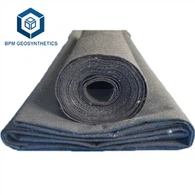


characteristics and uses
When it comes to applications, non-woven geotextile filter fabric serves several purposes. It is commonly used to prevent soil erosion and control sedimentation, making it ideal for erosion control projects. The fabric acts as a barrier, allowing water to pass through while still retaining soil particles. This helps to stabilize slopes, embankments, and other soil structures.
Additionally, non-woven geotextile filter fabric is utilized in drainage systems. It facilitates the efficient flow of water by preventing clogging of the underlying drainage pipes. This filtration material effectively separates the soil from the drainage aggregate, ensuring proper functioning of the system.
Furthermore, this geotextile filter fabric finds applications in road construction and railway projects. It provides added strength and stability to the pavement layers by acting as a separation and filtration layer. This enhances the overall performance and longevity of the road or railway track.
In summary, non-woven geotextile filter fabric possesses advantageous characteristics and finds extensive use in geotechnical engineering and filtration. Its non-woven structure enhances its filtration efficiency and strength, making it suitable for erosion control, drainage systems, and road construction.
- Landfill Construction: Landfill construction often includes the incorporation of non-woven geotextiles, which serve as a crucial layer for separation and filtration between the soil and waste materials. These geotextiles play a vital role in preventing the migration of fine particles, providing effective drainage pathways, and maintaining the overall integrity of the landfill structure.
- Stormwater Management: Geotextiles play an important role in stormwater management systems such as bio-retention ponds, detention basins, and rain gardens. They are carefully placed within the soil layers to help filter water, separate different materials, and improve the overall performance of the drainage system. By effectively managing stormwater runoff, geotextiles help reduce the risk of flooding and prevent erosion. When integrated into a well-designed stormwater management plan, geotextiles provide numerous benefits that help protect our environment and improve the overall quality of our water resources.
- Railways and Rail Embankments:Railway construction often involves the use of non-woven geotextiles, especially in the creation of rail embankments. These materials serve to separate the ballast from the underlying soil, allowing for better drainage while also increasing the track's load-bearing capacity.

application

Landfill Construction:
In landfill construction, non-woven geotextiles play a vital role as they serve as a filtration and separation layer between the soil and waste materials. This helps to prevent the movement of fine particles, thereby maintaining the integrity of the landfill structure. Additionally, these geotextiles provide drainage pathways, making it easier for water to pass through and preventing the buildup of excess moisture. Overall, the incorporation of non-woven geotextiles in landfill construction is critical to ensuring the safe and effective management of waste materials.
Railways and Rail Embankments:
Railway construction often utilizes non-woven geotextiles, especially in the building of rail embankments. These geotextiles play multiple roles, such as providing a barrier between the existing soil and the ballast, enhancing drainage, and improving the track's load-bearing capacity.

Stormwater Management:
Stormwater management systems, such as detention basins, bio-retention ponds, and rain gardens, rely on geotextiles to improve their performance. These fabrics are installed between different soil layers to increase water filtration, and facilitate material separation. By utilizing geotextiles, drainage systems are enhanced, and their overall efficiency is improved.
The versatility and functionality of geotextiles make them applicable in various civil engineering and construction applications where filtration, separation, reinforcement, and erosion control are required.
BPM Factory


BPM has four production lines, maximum width of 6m, length that can be customized. BPM can produce nonwoven needle punched short fiber and filament continuous geotextile, It has polypropylene and polyester material. They're exported all over the world.
BPM Geotextile Packaging


contact information

Phone: +86 18263827229

Envelope: elena@hdpetgm.com

Address: Mingtang Road No.59, Taishan Technology and Culture Industrial Park, Taishan District, Shandong, China. 27100

Whatsapp: +86 18263827229

Elena

Elena

Geomembrane
Geotextile

Geogrid
Hot Tags: non woven geotextile filter fabric, China non woven geotextile filter fabric manufactures, suppliers, factory