




Products Description
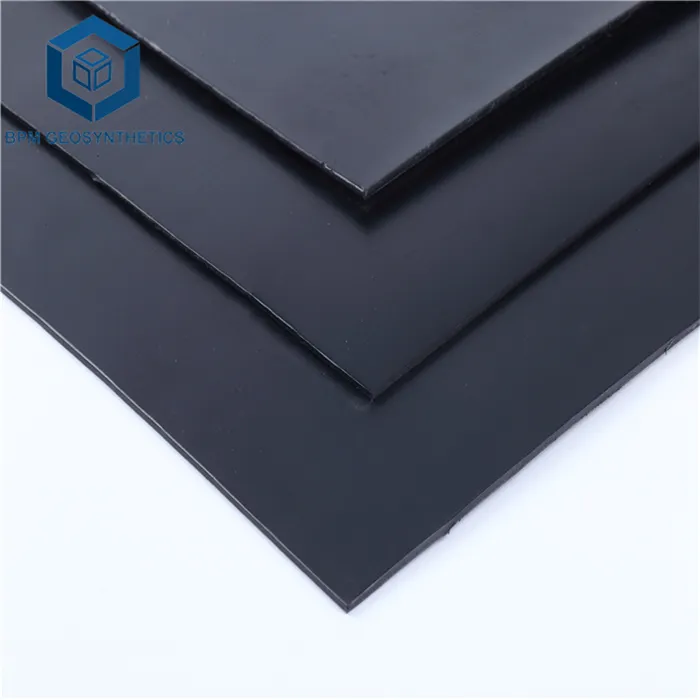
HDPE underground mining geomembranesThe durability of these mining hoses is exceptional, as they can withstand harsh conditions without getting punctured, torn, or damaged by the sun's UV radiation. They are also resistant to various chemicals that are typically present in mining operations, including acidic and alkaline substances. Their robustness is particularly critical in underground mining environments, where the conditions are often harsh and unforgiving. As a result, these mining hoses have gained a reputation for their reliability and resilience, making them the go-to choice for most mining activities.

The thickness of the HDPE underground mining geomembraneA thicker geomembrane can significantly impact its performance in many ways. One key advantage is its enhanced ability to withstand physical damage such as punctures, tears, and other hazards commonly found in harsh underground mining environments. This increased resistance is crucial when the geomembrane is exposed to sharp equipment, rocks, and other potential sources of damage. Therefore, opting for a thicker geomembrane can provide added protection and durability in such demanding conditions.
The thickness of the HDPE geomembrane used for underground mining is a critical factor that determines its resistance to chemical damage. Typically, thicker geomembranes offer higher protection from chemical attacks from acidic or alkaline substances typically found in mining operations. The rationale for this is simple: a thicker geomembrane provides a greater barrier between the chemicals and the surrounding soil and groundwater. Consequently, it can better withstand the harsh environment of mining operations than thinner geomembranes, which are more susceptible to chemical disintegration and leaks. Therefore, mining operations should opt for thicker geomembranes to minimize environmental damage from chemical spills and ensure the safety of their workers.

Although a thicker geomembrane can provide increased protection and durability, it can also pose challenges during installation and maintenance. It may require a greater investment of time, effort, and resources to properly install and ensure its ongoing effectiveness. Furthermore, a thicker geomembrane may come with a higher cost compared to a thinner one. Therefore, it's important to carefully weigh the benefits and drawbacks of a thicker geomembrane and determine what thickness is most appropriate for the specific needs of a given project.
Other application

GeomembranesGeomembranes are highly versatile materials that are extensively used for creating barriers against the movement of liquids or gases. Their widespread applications are due to their immensely useful properties such as high tensile strength, flexibility, and resistance to chemicals, puncture, and UV rays. The areas where geomembranes are employed include waste management, mining and mineral processing, agriculture, landscaping, construction, and environmental protection.
In waste management, geomembranes form the basis of engineered landfill liners that act as a barrier against the migration of contaminants from the landfill into the surrounding environment. In mining and mineral processing, they are used for leach pads, tailings dams, and storage ponds to prevent the escape of hazardous materials into groundwater. In agriculture and landscaping, geomembranes are used to create irrigation ponds, farm reservoirs, and water storage tanks.
geomembranes are commonly used in construction for building foundations and basements, retaining walls, tunnels, and underground structures. They also serve as a crucial layer in sealing roofs, ponds, and lagoons. Environmental protection is another area where geomembranes find an extensive application. They are employed to prevent soil erosion and contamination, to line ponds and lakes, and for remediation of polluted sites.
In short, geomembranes have a multifarious range of applications across multiple industries and are vital for achieving effective waste management, environmental protection, and efficient utilization of resources.
Geomembranes are a crucial component in safeguarding the environment. They find extensive application in environmental protection, particularly in areas such as landfills, waste containment facilities, and hazardous waste storage sites. The primary purpose of geomembranes in these settings is to prevent the migration of harmful contaminants, ensuring that they do not seep into the surrounding soil and groundwater. By acting as a robust barrier, geomembranes contribute significantly to preserving the integrity of ecosystems and preventing potential ecological disasters.
Geomembranes are utilized in water containment settings like irrigation systems, canals, and reservoirs to prevent the loss and seepage of water. Their ability to prevent water loss and seepage makes them an ideal solution for water containment projects, where water conservation is a top priority. Whether it's for agriculture or urban areas, the use of geomembranes in water containment systems has become increasingly popular due to its effectiveness and reliability. By utilizing this technology, water can be conserved and protected, helping to sustain life and the environment for generations to come.
Geomembranes are essential in mining operations to safeguard the environment from the potential release of polluted water. They find application in various mining areas, including tailings ponds, heap leach pads, and mining pit liners. By effectively preventing the leakage of contaminated water into the surrounding ecosystem, these geomembranes play a crucial role in maintaining the sustainability and integrity of mining practices.
Geomembranes have found immense utility in the field of agriculture. Farmers use them as pond liners, silage covers, and irrigation systems to combat three major issues -- soil erosion, water loss, and contamination. By preventing the leakage of water through the soil, geomembranes help in conserving irrigation water while also acting as a shield against soil contamination caused by pesticides and fertilizers. Consequently, these innovative liners have become a popular choice for farmers across the globe.
Geomembranes play a vital role in the construction industry, particularly in preventing water infiltration and damage to structures like tunnels, retaining walls, and foundations. With their unique properties, geomembranes create a barrier against moisture, making them highly effective in protecting buildings and structures from the damaging effects of water. From preventing leaks to ensuring the structural integrity of the entire construction project, geomembranes are a crucial material in the modern construction landscape. Whether it's a massive infrastructure project or a small-scale building, the use of geomembranes guarantees long-term sustainability and durability.
Geomembranes find significant usage in the oil and gas industry, particularly in impoundments, pits, and storage tanks. They prove to be an effective barrier to prevent hydrocarbon migration into the nearby environment, thus minimizing any detrimental impact on the ecosystem.
Geomembranes find application in transportation projects, specifically in preventing soil erosion and water infiltration in road and railway embankments.
These are just a few examples of the many applications of geomembranes. The choice of geomembrane material and design depends on the specific requirements of the application, including the type of liquids or gases involved, the environmental conditions, and the desired level of protection.
Production process

advantages
Our advantage

Four production lines

Customization of various colors

Welding after-sales service

quality control
we are committed to providing high-quality products and services, ensuring delivery time, controlling quality, providing comprehensive after-sales service, meeting customer needs and expectations, and establishing long-term cooperative relationships.
Certificates

Contact information

Phone: +86 18263827229

Envelope: elena@hdpetgm.com

Address:Mingtang Road No.59,Taishan Technology and Culture Industrial Park,Taishan District,Shandong,China.27100

Whatsapp: +86 18263827229

Elena

Elena

Geomembrane
Geotextile

Geogrid
| Test | Unit | Standard | Test Frequency | ||||||||||||
| Mechanical Properties | Thickness | mm | D5199 | 0.2 | 0.3 | 0.5 | 0.7 | 0.75 | 1.00 | 1.25 | 1.50 | 2.00 | 2.50 | 3.00 | Per roll |
| Density | g/cc | D1505/D792 | 0.94 | 90,000 kg | |||||||||||
| Tensile Properties | D 6693 | ||||||||||||||
| · yield strength | kN/m | Type IV | 3 | 5 | 7 | 10 | 11 | 15 | 18 | 22 | 29 | 37 | 44 | 9,000 kg | |
| · break strength | kN/m | 5 | 8 | 13 | 18 | 20 | 27 | 33 | 40 | 53 | 67 | 80 | |||
| · yield elongation | % | 12 | 12 | 12 | 12 | 12 | 12 | 12 | 12 | 12 | 12 | 12 | |||
| · break elongation | % | 700 | 700 | 700 | 700 | 700 | 700 | 700 | 700 | 700 | 700 | 700 | |||
| Tear Resistance | N | D 1004 | 25 | 38 | 62 | 87 | 93 | 125 | 156 | 187 | 249 | 311 | 374 | 20,000 kg | |
| Puncture Resistance | N | D 4833 | 64 | 96 | 160 | 224 | 240 | 320 | 400 | 480 | 640 | 800 | 960 | 20,000 kg | |
| Stress Crack Resistance | hr. | D 5397 | 500 hr. | per GRI GM-10 |
|||||||||||
| Carbon Black Content | % | D 4218 | 2.0-3.0% | 9,000 kg | |||||||||||
| Carbon Black Dispersion | D 5596 | For 10 different views: 9 in Categories 1 or 2 and 1 in Category 3 | 20,000 kg | ||||||||||||
| Reference Properties | Oxidative Induction Time | min | D 3895 | 100 min. | 90,000 kg | ||||||||||
| (a) Standard OIT | D 5885 | 400 min. | |||||||||||||
| (b) High Pressure OIT | |||||||||||||||
| Oven Aging at 85°C retained after 90 days |
% | D 5721 | 55% | per each | |||||||||||
| (a) Standard OIT - % | D 3895 | 80% | formulation | ||||||||||||
| (b) High Pressure OIT - % | D 5885 | ||||||||||||||
| UV Resistance | % | 50% | per each | ||||||||||||
| High Pressure OIT - % retained after 1600 hrs |
D 5885 | formulation | |||||||||||||
Hot Tags: hdpe underground mining geomembrane, China hdpe underground mining geomembrane manufactures, suppliers, factory


