




Products Description
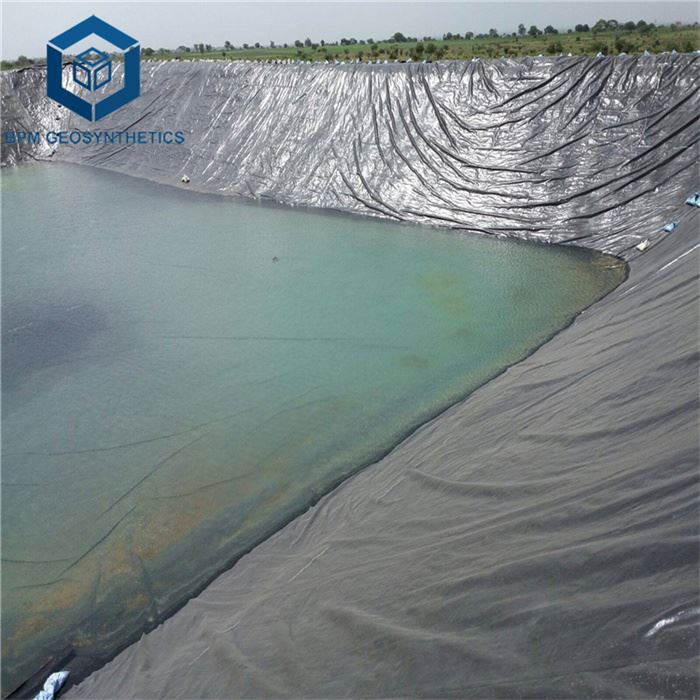
Geomembranes made of HDPE (High-Density Polyethylene) are versatile materials that can be used for several purposes, such as lining ponds and constructing swimming pools. The use of HDPE geomembranes in these applications is highly recommended for their outstanding resistance to various chemicals, like chlorine, making them an ideal choice.
If you are looking for a solution to prevent water leakage and seepage in your swimming pool, HDPE geomembrane can be the perfect choice. The geomembrane acts as a waterproof layer and effectively prevents water from permeating into the soil around the pool. As a result, you can enjoy a leak-free and hassle-free swimming experience. So, don't hesitate to install HDPE geomembrane as a pond liner in your swimming pool and enjoy the benefits for years to come.
The impact of chlorine on HDPE geomembrane is generally considered to be minimal due to the excellent chemical resistance of HDPE. It can endure exposure to chlorine and other pool chemicals without significant deterioration. However, it is essential to note that extended exposure to high concentrations of chlorine or potent chemicals may gradually affect the geomembrane. Hence, it is crucial to maintain the pool properly and manage water chemistry to ensure the longevity of the geomembrane.
To guarantee the right HDPE geomembrane is chosen and to obtain expert advice on installation, upkeep, and chemical compatibility for swimming pool applications, it is advisable to consult with a specialized professional or manufacturer in this field.

Installation Notes
When using HDPE geomembranes as pond liners, it is important to remember several maintenance requirements. Here are some key points to consider:
Regular inspections are crucial in order to identify any potential issues, damage, or wear on the geomembrane. It is important to thoroughly inspect the liner for signs of deterioration, punctures, or tears on a consistent basis. Pay close attention to any extreme weather conditions or activities that may have exerted stress on the liner, as inspections should be conducted following such events. 2. Cleaning: It is essential to keep the geomembrane clean to prevent the buildup of debris, algae, or other materials that could potentially damage the liner or compromise its effectiveness. Remove any debris or vegetation from the surface of the liner periodically. 3. Repair: If any damage or punctures are detected during inspections, prompt repairs should be carried out to prevent further deterioration and water leakage. Small punctures or tears can often be repaired using patching materials specifically designed for HDPE geomembranes. 4. Water Chemistry: Maintain proper water chemistry to prevent the buildup of chemicals or substances that could potentially degrade the geomembrane. Avoid excessive chlorine levels or the use of harsh chemicals that could have a detrimental effect on the liner. 5. Vegetation Control: Prevent the growth of vegetation around the pond or swimming pool area, as plant roots can potentially penetrate the geomembrane and cause damage. Use appropriate measures to control and remove vegetation regularly. 6. UV Protection: HDPE geomembranes are susceptible to degradation from prolonged exposure to UV radiation. If the geomembrane is exposed to direct sunlight, consider implementing measures to protect it, such as using shading structures or applying a UV-resistant coating. 
Geomembranes Pond Liner Application
BPM geomembrane factory and production
|


contact information

|
Properties |
Test Method |
Test Value |
|||||||||
|
|
|
0.5 mm |
0.75mm |
1.00 mm |
1.25 mm |
1.50 mm |
2.00 mm |
2.50 mm |
3.00 mm |
||
|
Maximum Deviation of thickness |
|
-15% |
-15% |
-15% |
-15% |
-15% |
-15% |
-15% |
-15% |
||
|
Density (min. ave.) |
D 1505/D792 |
0.940 g/cc |
0.940 g/cc
|
0.940 g/cc |
0.940 g/cc |
0.940 g/cc |
0.940 g/cc |
0.940 g/cc |
0.940 g/cc |
||
|
Tensile Properties(min.ave) |
Yield strength
Break strength |
D6693 |
8N/mm |
11 N/mm |
15 N/mm |
18 N/mm |
22 N/mm |
29 N/mm |
37 N/mm |
44 N/mm |
|
|
|
|
|
14N/mm |
20N/mm
|
27 N/mm |
33 N/mm |
40 N/mm |
53N/mm |
67 N/mm |
80 N/mm |
|
|
Yield elongation |
|
12% |
12% |
12% |
12% |
12% |
12% |
12% |
12% |
||
|
Break elongation |
|
700% |
700% |
700% |
700% |
700% |
700% |
700% |
700% |
||
|
Tear Resistance (min. ave.) |
D 1004 |
63 N |
93 N |
125 N |
156 N |
187 N |
249 N |
311 N |
374 N |
||
|
Puncture Resistance (min. ave.) |
D 4833 |
160N |
240N |
320 N |
400 N |
480 N |
640 N |
800 N |
960 N |
||
|
Carbon Black Content (range) |
D 4218 |
2.0-3.0 % |
2.0-3.0 % |
2.0-3.0 % |
2.0-3.0 % |
2.0-3.0 % |
2.0-3.0 % |
2.0-3.0 % |
2.0-3.0 % |
||
|
Oxidative Induction Time (OIT) (min.ave.) Standard OIT |
D 3895 |
100 min. |
100 min. |
100 min. |
100 min. |
100 min. |
100 min. |
100 min. |
100 min. |
||
|
Oven Aging at 85°C Standard OIT (min. ave.) - % retained after 90 days |
D 5721 D 3895 |
55% |
55% |
55% |
55% |
55% |
55% |
55% |
55% |
||
|
UV Resistance High Pressure OIT (min. ave.) - % retained after 1600 hrs |
D 3895 D 5885 |
50% |
50% |
50% |
50% |
50% |
50% |
50% |
50% |
||
Hot Tags: polyethylene hdpe geomembrane pond liner, China polyethylene hdpe geomembrane pond liner manufactures, suppliers, factory


